back

back to previous site

event:

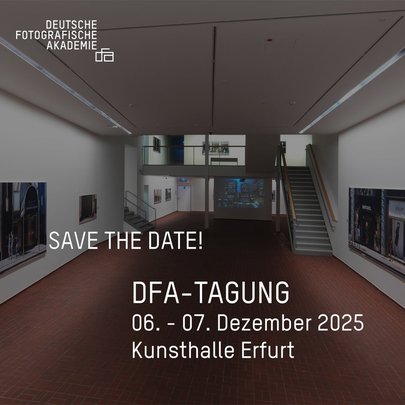
2025 DFA Winter Conference | Kunsthalle Erfurt

date:

06-07.12.2025

city:

Erfurt

address:

Fischmarkt 7, 99084 Erfurt

2025 DFA Winter Conference | Kunsthalle Erfurt

The German Photographic Academy (DFA) is holding its winter conference on 6–7 December at the Kunsthalle Erfurt. Susanne Knorr will present the work of the Kunsthalle. Contributions will come from Christoph Tannert (‘Artistic Photography and Subculture in the Accession Area’), Thomas Gust on Thomas Hoepker's colour photographs from the GDR (1972–1990) and Erfurt-based photographer Nora Klein, among others. A portfolio walk, a book table and a city tour with a focus on photography are also planned.

Venue

Kunsthalle Erfurt

Programme

Saturday, 6. December

09:30 - 10:00 Arrival
10:00 - 10:30 Welcome and book table presentation
10:30 - 11:00 Bertram Kober
11:00 - 12:00 Susanne Knorr (guest lecture)
11:30 - 12:30 Boris Eldagsen

12:30 - 15:00 Lunch break
with 13:15 - 14:15 City tour

15:00 - 16:00 Nora Klein (guest lecture)
16:00 - 16:30 Coffee break
16:30 - 17:30 Christoph Tannert (guest lecture)
17:30 - 18:00 Thomas Gust
18:00 Reception with the President's speech | Book table

Sunday, 7 December

09:30 - 10:00 Arrival
10:00 - 11:00 Sebastian Bühler (guest lecture)
11:00 - 12:30 Open discussion and portfolio walk

12:30 - 14:00 Lunch break | Book table

14:00 - 14:45 Nina Röder + Ingo Taubhorn
14:45 - 15:15 Sabine Schründer
15:15 - 15:45 Coffee break | Book table
15:45 -16:15 Göran Gnaudschun
16:15 - 17:00 Wrap-up

All lectures are open to the public and free of charge. Further information will follow shortly!

savethedateerfurt2

Presentations

Bertram Kober

‘It's taking its course’, a media collage

'The novel's realism and the documentary style of the photographs complement each other extremely well, to the extent that one almost forgets they were created at different times and completely independently of each other. The combination of the two enhances each medium without compromising their individuality. The sober yet detailed casualness with which Loest describes his settings has a distinctly photographic quality. In places, the text merges with the unpretentious photographs, which aptly capture the essence of the locations and their inhabitants. In turn, the images support the text's close connection to Leipzig's historical reality in the second half of the 1970s, reflected in the author's realistic style. Conversely, the excerpts from the novel lend the photographs the character of scene images, and the people depicted become, in a sense, characters in the novel.'

From the introduction to the publication by Phillip Freytag, Museum of Fine Arts Leipzig.

Bertram Kober

Born in Leipzig in 1961, studied photography from 1982 to 1987 at the Academy of Visual Arts Leipzig under Professor Evelyn Richter and Arno Fischer, additional studies in communication design at the University of Essen under Professor Angela Neuke in 1990, freelance photographer since 1990

1990 Co-founder of the Punctum Leipzig photography agency
1997 Kodak Photo Calendar Prize
2003 Appointed to the German Photographic Academy
2005–2007 Lecturer in photography at the fas – Fotoschule am Schiffbauerdamm Berlin
2007–2023 Lecturer in photography at the Neue Schule für Fotografie Berlin
2011 “Best photograph of the 54th International Art Exhibition” at the Venice Biennale
2013 Recognition Award “Architectural Image” European Architectural Photography Prize, Frankfurt am Main

Kober Strasse des 18 Oktober
Bertram Kober | Strasse des 18. Oktober

Susanne Knorr

OUTPUT – INPUT

Thuringia/Erfurt: A cursory look at impact and influence

The GDL was founded in Eisenach over a hundred years ago. Today, the DFA meets in the heart of Thuringia, at the Kunsthalle Erfurt. The lecture offers a spatial examination of photographic output and input, focusing on photographers born or working in the region, as well as exhibitions, teaching activities, and institutional traces of the medium in Thuringia and Erfurt. A glimpse at the work and impact, at an image space in which regional location and supra-regional photographic history intertwine productively.

Susanne Knorr (born in Magdeburg in 1969): Studied art history, German literature and philosophy at Friedrich Schiller University in Jena, Aix-en-Provence and Montpellier (MA), 2007–2012: freelance art historian for the Klassik Stiftung Weimar and the Kunstmuseen Erfurt, among others; since 2012: curator at the Kunstmuseen Erfurt; since 2020: curator at the Kunsthalle Erfurt; 2018–2022 lecturer in art history, University of Erfurt, chair of the Erfurt Art Association, publications on modern and contemporary art.

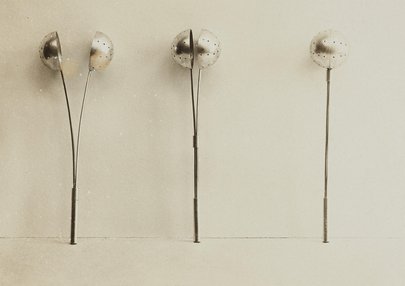
Bauhaus_Lucia-Moholy-Teekugeln von Josef Knau, Bauhaus Weimar
Lucia-Moholy-Teekugeln by Josef Knau, Bauhaus Weimar

Boris Eldagsen

RIVALEN – Promptography vs. Photography.

Since 2023, Boris has been clarifying the relationship between photography and AI-generated images ('promptography') through lectures and discussions. Until now, he has primarily done so as a keynote speaker, but since 2025, he has also been active as a curator and artist. This year, he curated two exhibitions on this topic: 'RIVALS' for the European Month of Photography in Berlin in March, and 'PSYCHOPOMP!' for the opening of the new Roger Ballen Centre for Photography in Johannesburg in September. In November, he held his solo exhibition, 'Hauntology for Beginners', at the La Chambre photography museum in Strasbourg, where he explored the difference between photography and promptography as an artist for the first time. Drawing on these three exhibitions, his lecture highlights the unique selling point of photography in the age of AI, as well as the specific strengths that generative images can offer.

Boris Eldagsen (born 1970) studied Fine Art and Philosophy in Cologne, Mainz, Prague and Hyderabad.

Since 2000, his photographic and media artworks have been exhibited and awarded prizes at a number of international institutions and festivals, including CCP Melbourne, ACP Sydney, EMAF Osnabrück, the Edinburgh Art Festival, FORMAT Derby, Noorderlicht Groningen, Chobi Mela Dhaka, the Pingyao Festival, the Singapore International Photography Festival, the Kochi-Muziris Biennale, the Le Havre Biennale, the ELEKTRA Digital Art Biennial in Montreal and the Biennale of Electronic Arts in Perth.

He is also one of the world's leading experts on AI-generated images. In April 2023, he sparked a global debate about the relationship between photography and AI-generated images by rejecting the Sony World Photo Awards. He was dubbed the 'poster boy of the AI debate' by SZ, and his image 'PSEUDOMNESIA | The Electrician' was hailed by The Guardian as 'the picture that stopped the world', becoming a symbolic image of a new era.

Since 2004, he has taught at various international art academies, including the VCA and PSC in Melbourne, the Mainz Academy of Fine Arts and the Ludwigsburg Film Academy. He has delivered workshops and presentations at over 40 universities worldwide. He was one of the first to offer workshops on AI-generated images, teaching countless creatives the necessary AI knowledge. He currently teaches 'AI for Creatives' at LABASAD – Barcelona School of Art and Design.

He produces a monthly AI podcast with Dr. Jürgen Scriba for Fotorat.

In 2025, he was a jury member for the Ars Electronica Award in Linz, Austria, and curated the AI group exhibition PSYCHOPOMP! for the opening of the Roger Ballen Centre for Photography in Johannesburg, South Africa.

He lives and works in Berlin.

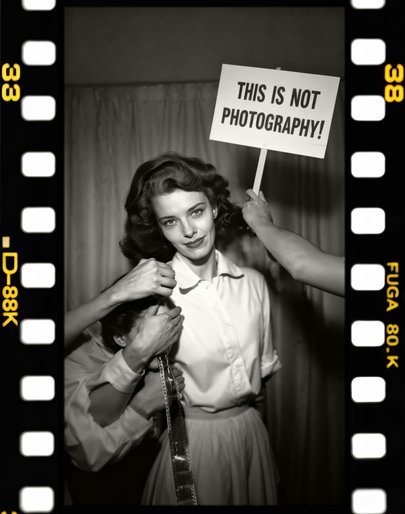
boris_eldagsen_trap
Boris Eldagsen | „THIS IS NOT PHOTOGRAPHY | Trap (Part I)”, promptography, 2025

Nora Klein

Wer bist du, Tod?

The only certainty we have is that everything that lives will die. Death is the inevitable end of every life. No one can claim they didn't know. So why is it so difficult for us to talk about it?

Over several years, author Sonja Hartwig and photographer Nora Klein accompanied and interviewed people who were dying. These encounters resulted in a powerful book, published in May 2025 by Hartmann Books in Stuttgart, that is as moving in its words as it is in its images. The dying people themselves primarily look back and ahead, reflect, and share what still seems important to them in the face of death.

Nora Klein is a documentary and portrait photographer. She works on commission for publications such as Der Spiegel, Stern and Die Zeit. In her long-term projects, she employs documentary techniques and an empathetic approach to capture stories that often remain unseen, focusing on emotional, social, and interpersonal situations that are difficult to articulate.

Her picture-text book Mal gut, mehr schlecht (Hatje Cantz) explores the emotional world of people suffering from depression, and it was nominated by the Stiftung Buchkunst for inclusion in Die Schönsten Deutschen Bücher 2017 (The Most Beautiful German Books of 2017). Over a period of six years, she presented the project nationwide in exhibitions and lectures together with someone affected by depression. In 2025, Hartmann Books published her second illustrated book, Wer bist du, Tod? (Who are you, Death?). In it, she accompanies eight people in the final phase of their lives, offering a response to speechlessness and advocating a more natural approach to the end of life.

Her work has been exhibited in numerous solo and group exhibitions in Germany and abroad. She studied photographic storytelling while taking a course in photojournalism and documentary photography at the University of Applied Sciences and Arts in Hanover and the Danish School of Media and Journalism in Aarhus. She lives and works in Erfurt.

https://noraklein.de/
https://wer-bist-du-tod.de/
https://malgutmehrschlecht.de

Wer bist du, Tod? Nora Klein
Nora Klein | Wer bist du, Tod?

Christoph Tannert

Artistic photography and subculture in the accession area

Photography in the GDR was characterised by a variety of trends and unusual individuals. Since around 1980, a network of artists from various disciplines has emerged, developing trends towards a 'different kind of photography in the GDR', or 'photography from below', which was linked to subcultural developments in photographic art.

Even more than 35 years after the fall of the Berlin Wall, there is still no comprehensive account of this phenomenon. In individual cases, there are only publications accompanying solo exhibitions. What can be said about these non-conformists? What do their pictures speak of?

An attempt at reconstruction.

Curator and author.

Born in Leipzig in 1955, he has lived in Berlin since 1976.
1976–1981: Studied art history and classical archaeology at Humboldt University in Berlin. Graduated with a degree.
1981–1984: Secretary of the ZAG Young Artists at the Central Board of the Association of Visual Artists of the GDR (VBK-DDR).
1984: Dismissed without notice for his commitment to young, non-conformist art.
1984-1991: Freelance critic and organiser of exhibitions in East Berlin and Eastern Europe, as well as publisher of artists' books, pamphlets and recordings through his own publishing house, URSUS Press.
Since 1991, project manager for visual arts, from 2000-2024 also artistic director of Künstlerhaus Bethanien GmbH and co-editor of BE magazine.

Curator of numerous exhibitions and author of various publications in art catalogues and the trade press since 1981.
Reviewer @ FotoFest Houston, FotoFest Beijing, Portfolio Review Moscow.
Member of the editorial advisory board of EUROPEAN PHOTOGRAPHY.

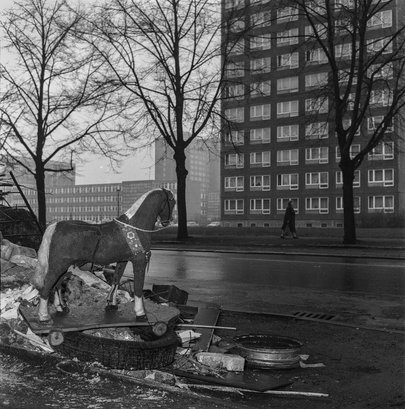
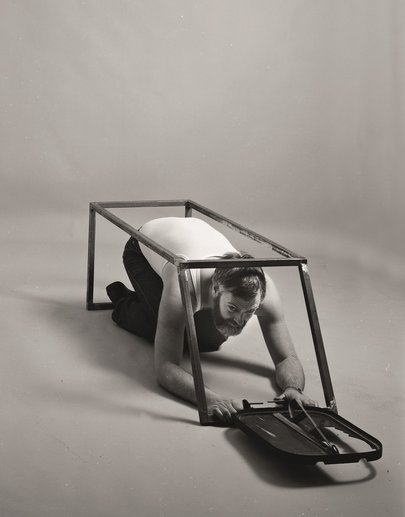
Christoph Sandig, Fahrversuch Gestell
Christoph Sandig | Fahrversuch Gestell

Thomas Gust

(Gallery and Publishing House Buchkunst Berlin)

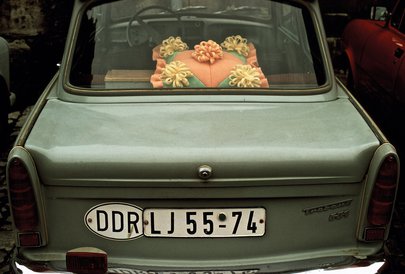
Thomas Hoepker: DDR / East Germany – Colour Works 1972–1990

Magnum photographer Thomas Hoepker's Kodachrome colours bring the GDR back to life in an impressive way! This illustrated book contains 145 photographs, many of which are being published for the first time, offering a profound insight into life in the 'other Germany'. Wolf Biermann, the award-winning poet and songwriter, enriches the work with an essay that contextualises the photographs.

No other country has been visited and photographed as intensively by Thomas Hoepker as the former GDR. In 1974, he became the first West German photographer to be officially permitted to take photographs in the GDR. He moved to East Berlin and travelled throughout the country from there. Until 1976, he reported for Stern magazine from East Berlin. His colour photographs, taken from the early 1970s to 1990, depict life in the GDR with empathy and understanding, showcasing Hoepker's signature humour. He documents both the bright state parades in front of decorated prefabricated buildings and the decaying old towns. He takes us on a socialist window-shopping tour and to the daily flag ceremony. He also portrays artists such as Katharina Thalbach and Wolf Biermann, as well as coal miners working in the soot-covered backyards of Prenzlauer Berg and farm workers in the fields of Thuringia.

Hoepker presents the GDR in its true colours, offering an alternative image of the country and its inhabitants while challenging the official representations of state propaganda, which held a monopoly on colour photography. His memorable images of the historical upheavals of the reunification period establish Thomas Hoepker as a chronicler of the disappearance of the GDR from history. Some of his photographs from 1990 seem to convey a deeper truth about the country's future.

Until now, only a small selection of Thomas Hoepker's photographs of the former GDR were known. This lecture describes the discovery of an extensive series in his archive in Southampton, and its historical classification. It also illustrates the intense and sometimes absurd surveillance of journalist couple Eva Windmöller and Thomas Hoepker by the Stasi during their work as Stern magazine correspondents in the GDR and East Berlin from 1974 to 1976. Furthermore, the process of selecting and creating a photo book for the international book trade is described.

The lecture is supplemented by an extensive selection of images from the GDR by Thomas Hoepker, as well as illustrations such as original double-page spreads from Stern magazine and Stasi files. The balancing act between state prohibitions and the topics and layout of print media, on the one hand, and Thomas Hoepker's own artistic conception of photography, on the other, gives rise to an independent form of authorial photography. Through its use of colour and an emphatic, often humorous, approach, this form departs from classic documentary photography. Thomas Hoepker's photographs of life in the GDR over three decades are a unique find in terms of their scope, artistic quality, and the insights they provide.

THOMAS HOEPKER
Thomas Hoepker | DDR / EAST GERMANY COLOUR WORKS 1972–1990

Sebastian Bühler

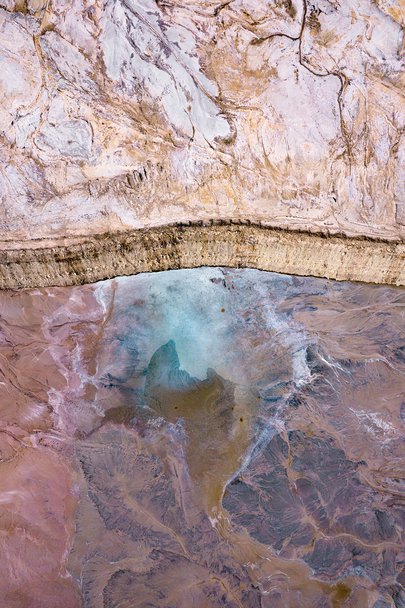
Toxic Aesthetic 2022 -2025

In his series, 'Toxic Aesthetics', Sebastian Bühler takes us on a journey through South-Eastern Europe. Since 2022, he has travelled to five countries: Bosnia and Herzegovina, Serbia, Kosovo, North Macedonia, and Bulgaria.

His work features overwhelming aesthetics: bright colours, strong contrasts and delicate structures attract the viewer, but it soon becomes apparent that this beauty is based on the real traces of human intervention in nature. Bühler's images reveal the environmental destruction caused by waste and the toxic by-products of energy production and raw material extraction, which contaminate the earth, water and air.

Moving between art and documentary photography, he does not seek effects; they arise from what he finds. His precise gaze transforms transient traces and injuries to the landscape into haunting compositions, where machines, scars, and rubbish develop their own powerful visual language.

Born in Augsburg in 1984.

BA in Photo Design from Munich University of Applied Sciences.

Sebastian Bühler's work lies in the field of artistic photography. He focuses on visualising traces of change, capturing the fragile, often overlooked beauty of places in transition with great sensitivity. He is interested in transforming real landscapes or situations into something abstract that raises questions about perception, change and transience, and goes beyond mere representation.

Sebastian Bühler lives and works in Augsburg. Having grown up in the 1990s, he was influenced early on by hip-hop culture, which inspired his interest in photography in the early 2000s. He studied Photo Design at the Munich University of Applied Sciences. His work has been exhibited in Belfast, Siena, Trieste, Munich and Berlin, among other places.

www.sebastianbuehler.de/
www.instagram.com/sebastian_buehler_photography/

Toxic Aesthetics_Kosovo_6_24
Sebastian Bühler | Toxic Aesthetics

Nina Röder & Ingo Taubhorn

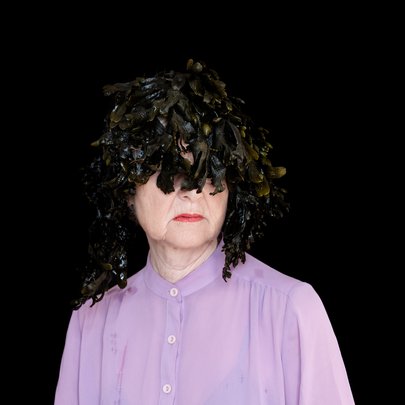
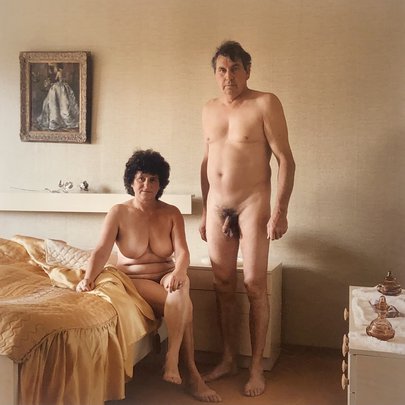
Röder and Taubhorn each represent two photographic positions that intersect at the junctures of identity, familial structures, and performative self-positioning. The artistic oeuvre of both artists features a series of works in which their mothers are portrayed as central figures. These works employ the technique of staged photography to raise questions concerning family genealogy, the politics of memory, and the transmission of ideas between generations. The works of these artists situate personal biographies in broader social contexts, combining autobiographical impulses with performative strategies, role-playing, costumes, and moments of absurdity.

It was at this point that Röder and Taubhorn reached a consensus to amalgamate their respective roles in the form of a collaborative exhibition project. The joint presentation of their works is intended to create a productive dialogue between two different but complementary aesthetic styles. A parallel viewing allows for a mutual sharpening of their themes: while differences in generation, perspective and formal implementation unfold visibly, the overarching questions of identity, family role models and the performative staging of the private sphere are simultaneously reinforced. This creates a resonance space in which the individual narratives of both artists gain new dimensions of meaning.

Ingo Taubhorn

Since the inception of his passion for this extraordinary medium, Ingo Taubhorn has been extensively engaged with the reception of photography – as an exhibition curator, publicist and mediator. In the course of his work as curator of the House of Photography at the Deichtorhallen Hamburg, he has overseen numerous presentations by international artists. Nevertheless, the focus of the biography remains firmly on the artist's personal evolution and the creation of his oeuvre.

In his photographic oeuvre, Taubhorn engages with foundational questions concerning human existence, including the significance of familial bonds and the depiction of masculinity.

The subject's friends are located within their private spaces, the confrontation with his own past and his relationship to his own body are evident, and the world is perceived as a sequence of images. On occasion, he engages in this practice in close collaboration with his mother, as evidenced by his preference for wearing her attire, thereby reinterpreting family role models. He is one to seek the universal in the personal. His gaze is an engaged one: he not only accompanies queer ways of life, but also negotiates social phenomena in the field of tension between artist and viewer. In doing so, he draws on the ideas of philosopher Jean-François Lyotard, who advocates for the recognition and defence of the uniqueness and autonomy of different ways of life, orientations, and cultures. In contrast to the prevalent notion of reconciliation, Taubhorn emphasises the significance of tensions as an integral component of a thriving society.

This thus brings the study full circle, connecting the artist's own oeuvre with his rigorous analysis of the reception of photographic images.

Ingo lives and works in Berlin, Germany.

Nina Röder

Nina Röder is a visual artist, professor of photography and freelance curator. Her academic background is in media art and design, which she studied at the Bauhaus University in Weimar, Germany. In addition to her photographic practice, she holds a doctorate in artistic research.

Two thematic complexes have been identified within Nina's artistic practice: On the one hand, she draws on a post-Romantic sensibility in which nature no longer appears as an untouched ideal, but as a site of reflection and performative encounter — as an opportunity to explore the human relationship to the natural world and, concomitantly, to emphasise its fragility and the urgency of its preservation.

Conversely, she produces series that address her family's biographies, with a deliberate focus on the implicit dynamics of identity formation and the transmission of intergenerational trauma. This encompasses the historical background of her family in Bohemia, who resided in what is presently known as the Czech Republic until their expulsion following the conclusion of the Second World War. The frequently absurd or poetic atmosphere of her scenographies conveys the tension of her characters' biographical experiences, while a playful – often humorous – approach plays a decisive role.

Nina lives and works in Berlin, Germany.

Nina_Röder_mums_new_hair
Nina Röder | Mums New Hair
taubhorn
Ingo Taubhorn

Sabine Schründer

Off The Grid

The material for the video lecture performance 'Off The Grid' was created as part of a performative exploration of dynamic conditions in the Arctic. This is a collage of moving images, photography, sound and text, which – like the subject of the investigation and the footage – is undergoing a process of transformation: images shift, sounds overlap, read texts defy classification. The formation of a structure coincides with its dissolution, occurring simultaneously. In order to render this process perceptible, the work is created during the lecture itself.

Sabine Schründer (born 1973) has been working as a photo and media artist in Berlin since 1999 and teaches conceptual photography and visual media at the Lette Verein. Her most recent solo exhibition, ALL PRECONCEPTIONS COLLAPSE (2025), featured works from the publication of the same name, published by Kodoji Press.

www.sabine-schruender.de

Schründer_OTG_01
Sabine Schründer | Off The Grid

Göran Gnaudschun

Stimmen, die sich suchen

2018–2024

At 3:32 a.m. on 6 April 2009, a powerful earthquake shook the Italian city of L'Aquila and its surrounding area. The tragedy was particularly severe in the village of Onna, which was located on the outskirts. Of its 300 inhabitants, 40 people died that night. Only a field of rubble remained. Onna had already experienced disaster during the Second World War when, on 11 June 1944, retreating German soldiers committed a massacre and blew up almost a third of the village's buildings.

The small village of Onna is a place of pain. Almost everyone here has lost a family member. It is not easy to live with this. An earthquake is more than just the vibration of stones; it shakes one's belief in the world's fundamental stability and reveals its transience.

The village has been reduced to ruins twice. I found historical pictures showing that the village looked just like it did in 2009 in 1944. Trauma runs through the ages and through families.

The wounds remain, whether they are caused by war crimes or natural disasters.

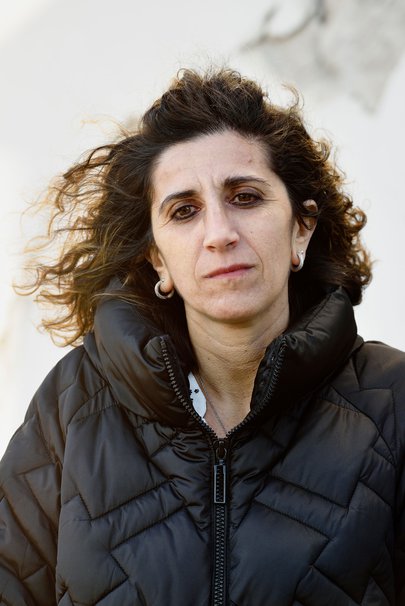
I photographed the village and took portraits of its inhabitants, including children, adolescents, and the elderly. I saw grief and pain in their faces, but also resilience and strength. I also photographed the village landscapes, immersing myself deeply in the place's past through historical images and private photos. In this way, the images from the past combine with the portraits and the quiet, deserted photographs of the present.

'Voices Searching for Each Other' is a work about memory and the passing of time; about pain and loss; but also about the human ability to live one's own life despite everything. There is only this one life. Everything lives on, but the earthquake shows how quickly the present can be divided into a 'before' and an 'after'. I pick up the threads and try to bring them back together for the viewer.

Göran Gnaudschun
Göran Gnaudschun | Stimmen, die sich suchen

published on: